I tried Google's Antigravity and its awesome, but...
How I vibecoded my first Astro v5 blog in 8 hours of active work (and hit the AI wall).
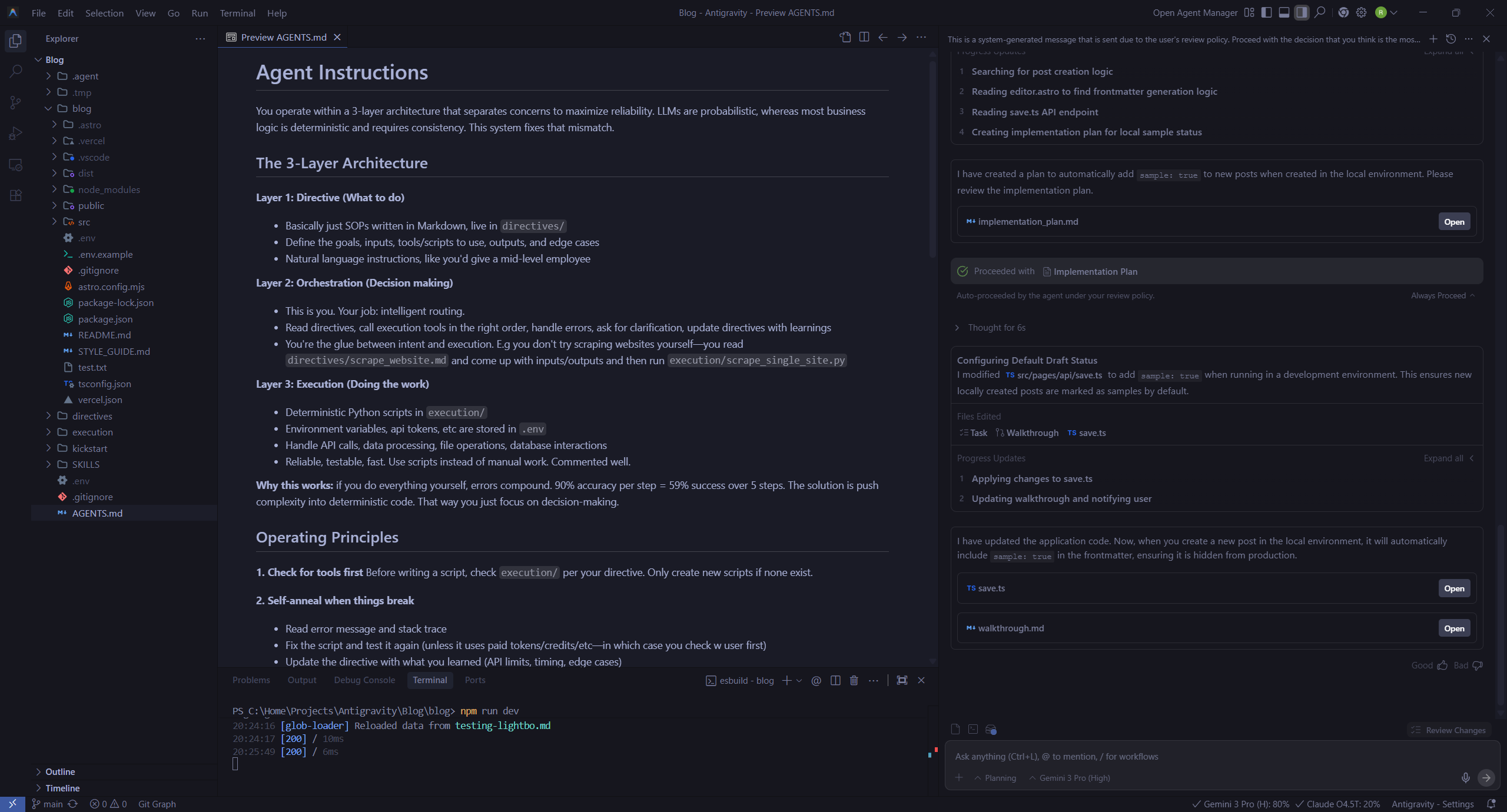
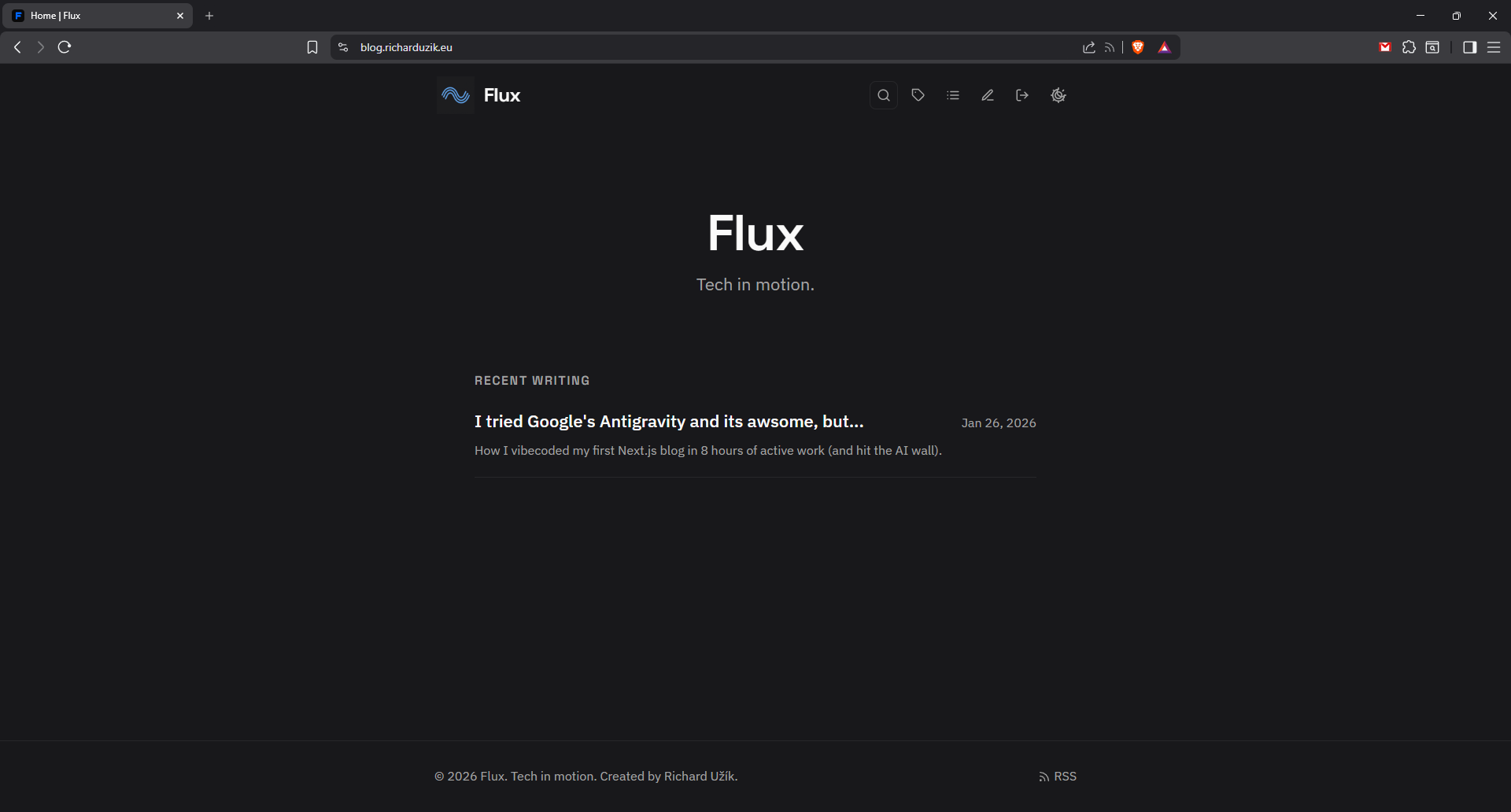
The Meta Reveal: If you are reading this right now, the experiment worked. This entire website—the layout, the typography, the deployment—was built using the process I'm about to describe.
I am new to writing blogs, but I wanted to test if the new wave of "Agentic IDEs" lives up to the hype. My goal? Vibecode a fully functional personal blog platform.
Here is how I went from an empty folder to a live Vercel deployment in 8 hours and the one major frustration I hit along the way.
The Tech Stack
Before we dive into the story, here is the toolkit I used:
- IDE: Google Antigravity
- Brain: Gemini 3 Pro / Claude Opus 4.5 & Anthropic Agent Skills
- Framework: Astro v5 + Vanilla CSS
- Strategy:
Agents.mdcontext file - Hosting: Vercel
1. The Setup: Giving the Agents a Brain
I didn't want to just "autocomplete" code; I wanted to act like a Product Manager directing a team of developers. To do this, I used a technique called Context Loading.
I used a file called Agents.md in the root of my project. This served as the "Constitution" for the AI agents. Together with that I inspired myself from this video and decided to try out Anthropic's skills repository.
Think of it as a "plugin system" that gives your AI specific superpowers without bogging it down. Instead of cramming every possible instruction into one giant prompt, you create small, modular folders with specific guides (like how to analyze a PDF or write specific code) that the agent only reads when it actually needs to perform that task. Anthropic also made available some example skills so that you can try it out.
The real game—changer is skill called Skill creator. It is basically a meta skill allowing you to create your own custom skills.
2. The Process: Vibecoding in 3 Steps
The actual coding felt less like typing and more like approving.
Step 1: The Blueprint (Gemini)
I started by asking Gemini to summarize the essential features of a personal blog. I didn't write this myself; I just asked:
"From feature perspective, what are the core functionalities that a personal blog should include?"
Once I had my very dummy functional specification, I saved it to my project as Idea.md and prompted the Agent to prepare full component specification based on my idea.
Step 2: The Agents Take Over
This is where Antigravity shines. Instead of just pasting an awfully big prompt to IDE saying:
"Create my blog website!!!"
I created a new skill. How? I used Skill creator with combination of Components.md that Antigravity generated from my idea, to extend Anthropic's frontend-designer skill. The AI brain did its magic, and the result was technical specification counting with all features I wanted to have in my blog.
Step 3: The "Meta" Proof
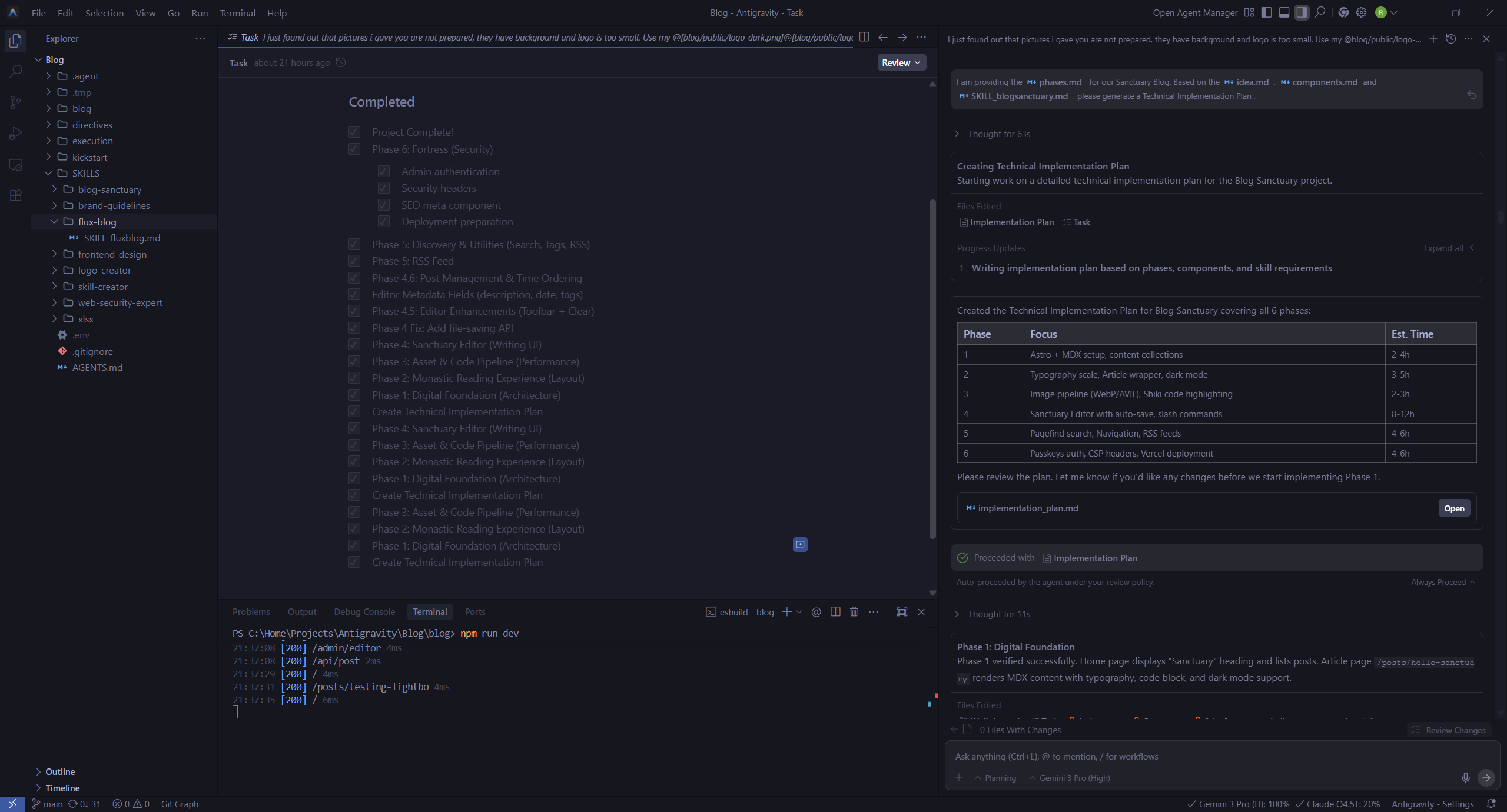
From this point, everything was very quick. I asked the Antigravity agent to prepare implementation phases and start development.
The Agent was automatically tracking tasks, preparing and planning each step ahead, and letting me test results after each phase of implementation. The brain also provided a walkthrough.md after each phase, based on which I was able to perform all needed UI tests—that was basically being created in front of my eyes in a matter of minutes.
3. The Downside: The Token Wall
It wasn't all smooth sailing. There is one major "But..." to this experience.
The Token Limit Reality Check - Antigravity is incredible, but even with Google AI Pro, you run out of tokens fast.
- GitHub Copilot: For ~$10/month, you feel like you have unlimited requests.
- Antigravity: You are promised a 5-hour reset window. Google advertises "priority access" and "generous rate limits" that refresh on this short cycle to allow for continuous work.
The Flow Killer: Vibecoding relies on momentum. When you are deep in the zone, watching the agents build your vision, and suddenly hit a "Limit Reached" wall, it forces you to stop.
You can switch to a lower-tier model, but the drop in intelligence is noticeable. You end up having to split your focus or just wait it out. For a tool designed to keep you in "flow," this is a significant friction point.
Conclusion
Is Google Antigravity the future? Yes. Is the pricing model there yet? Not quite.
But if you want to see what it feels like to have a team of senior engineers in your pocket, it is absolutely worth a try.